
A ceramic coating is not a better wax. It is a liquid resin — usually silica-based — that is applied by hand onto clean, corrected paint and then cures into a thin, hard, transparent layer chemically bonded to the clear coat. That bond is the whole difference: wax and spray sealants sit loosely on top of your paint and wash off within weeks, while a cured coating is part of the surface and is measured in years.
See It: Before and After
Three of our own coated cars, each photographed before and after. Drag the handle across any of them. A coating does not add colour — it makes the paint underneath read properly, and then keeps it that way.
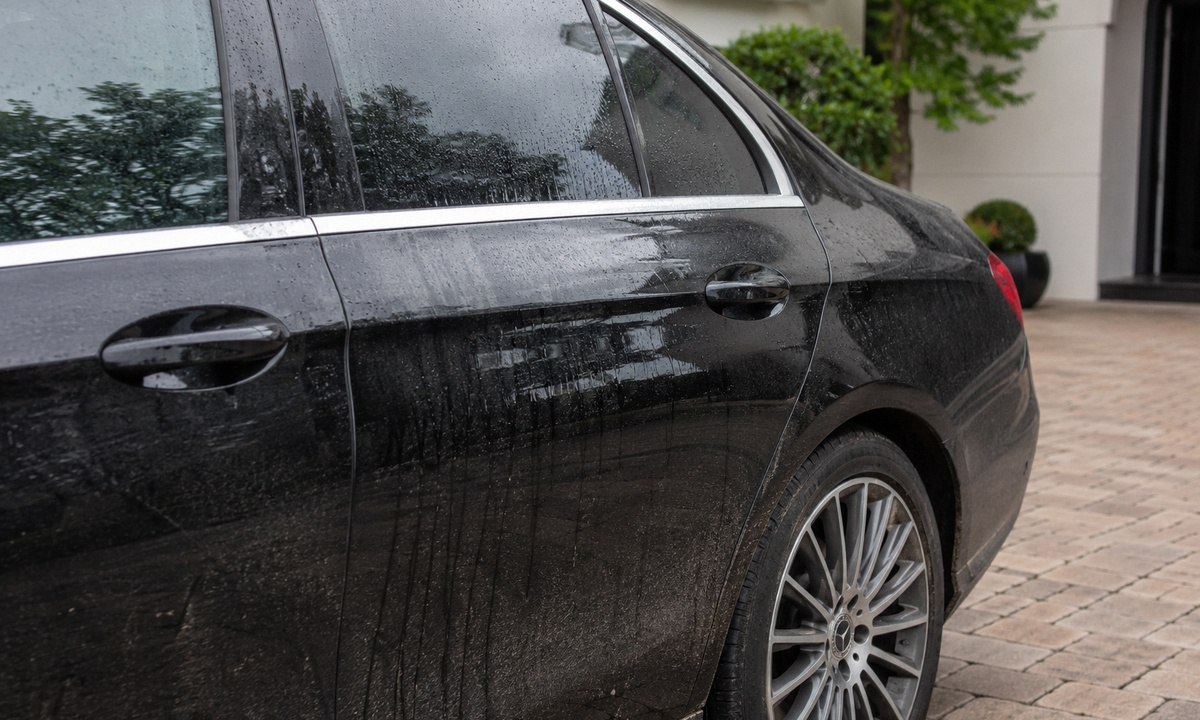
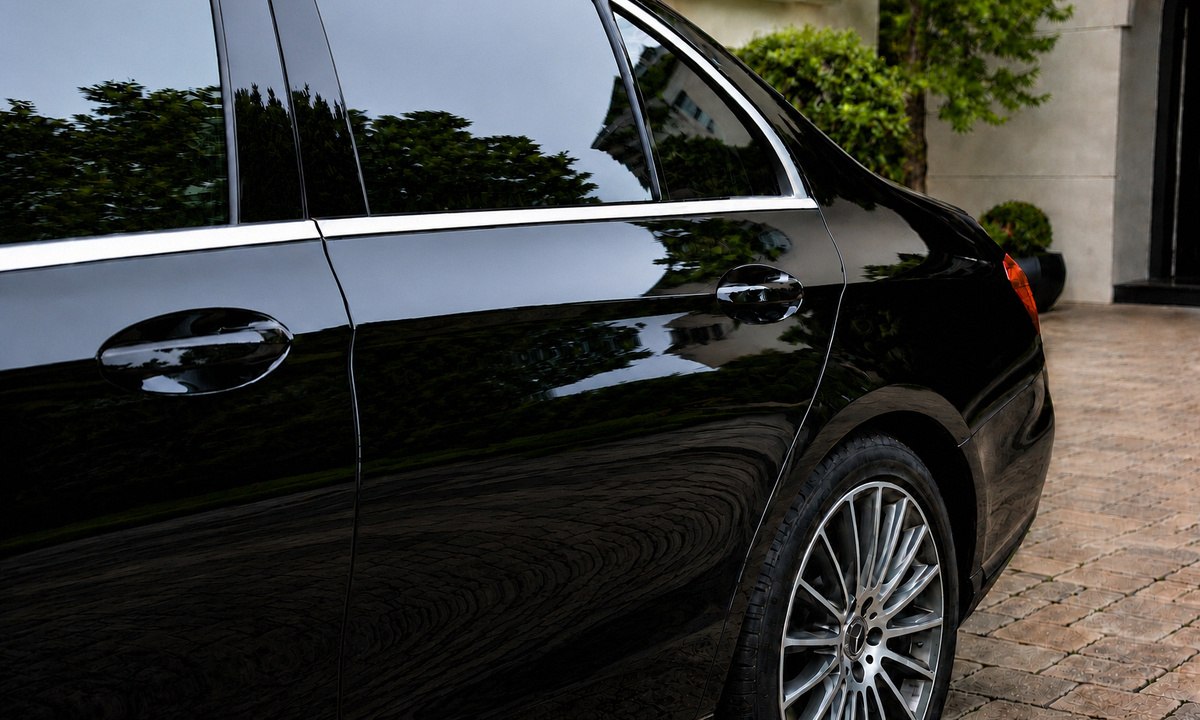
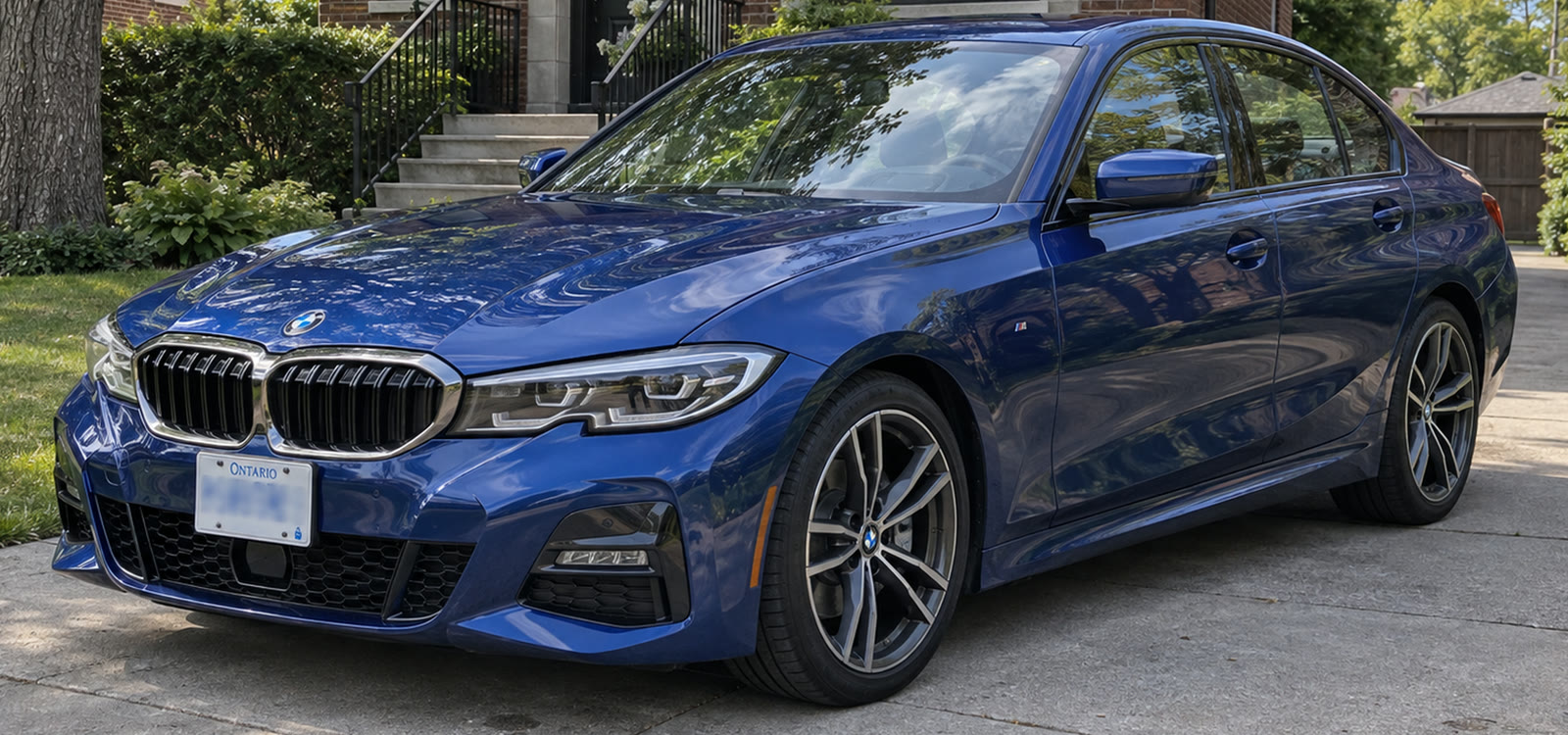
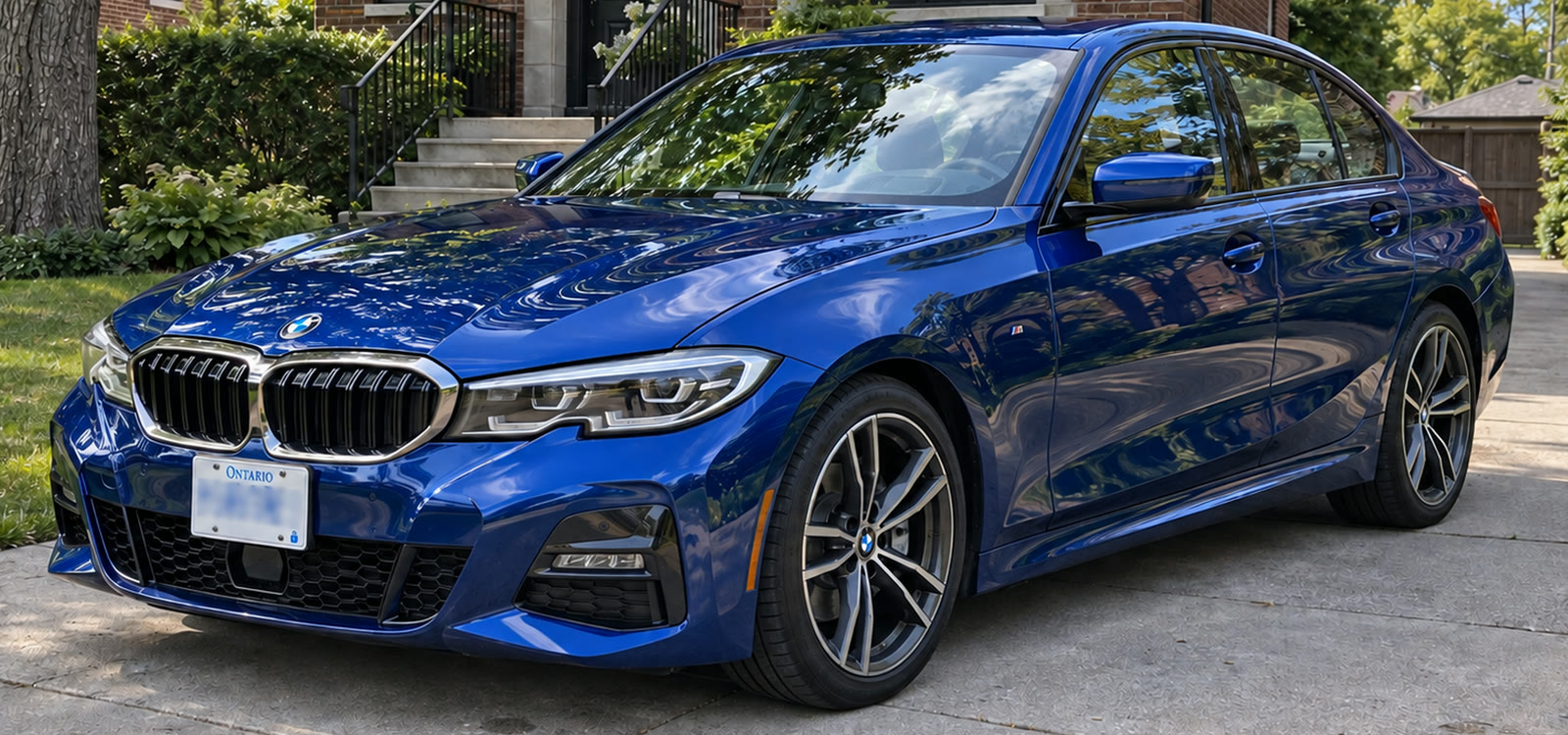
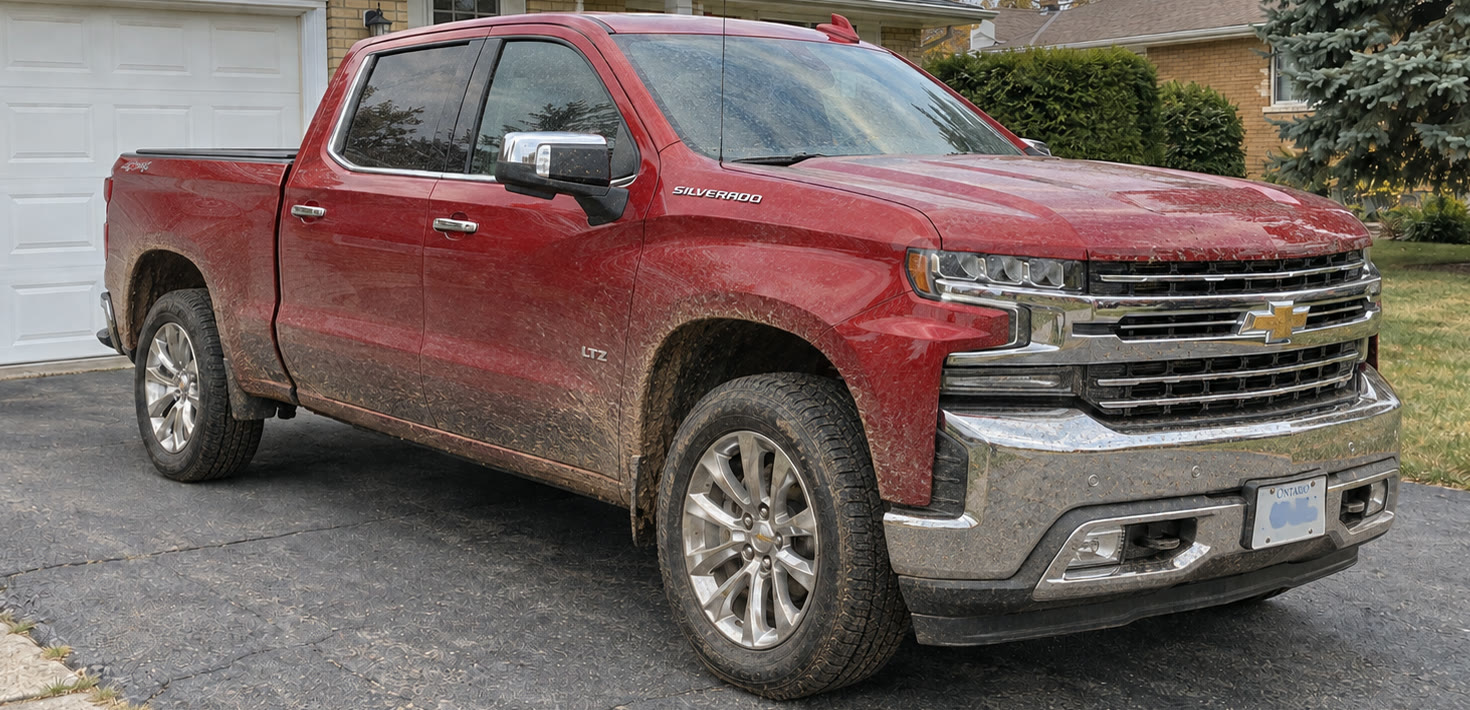
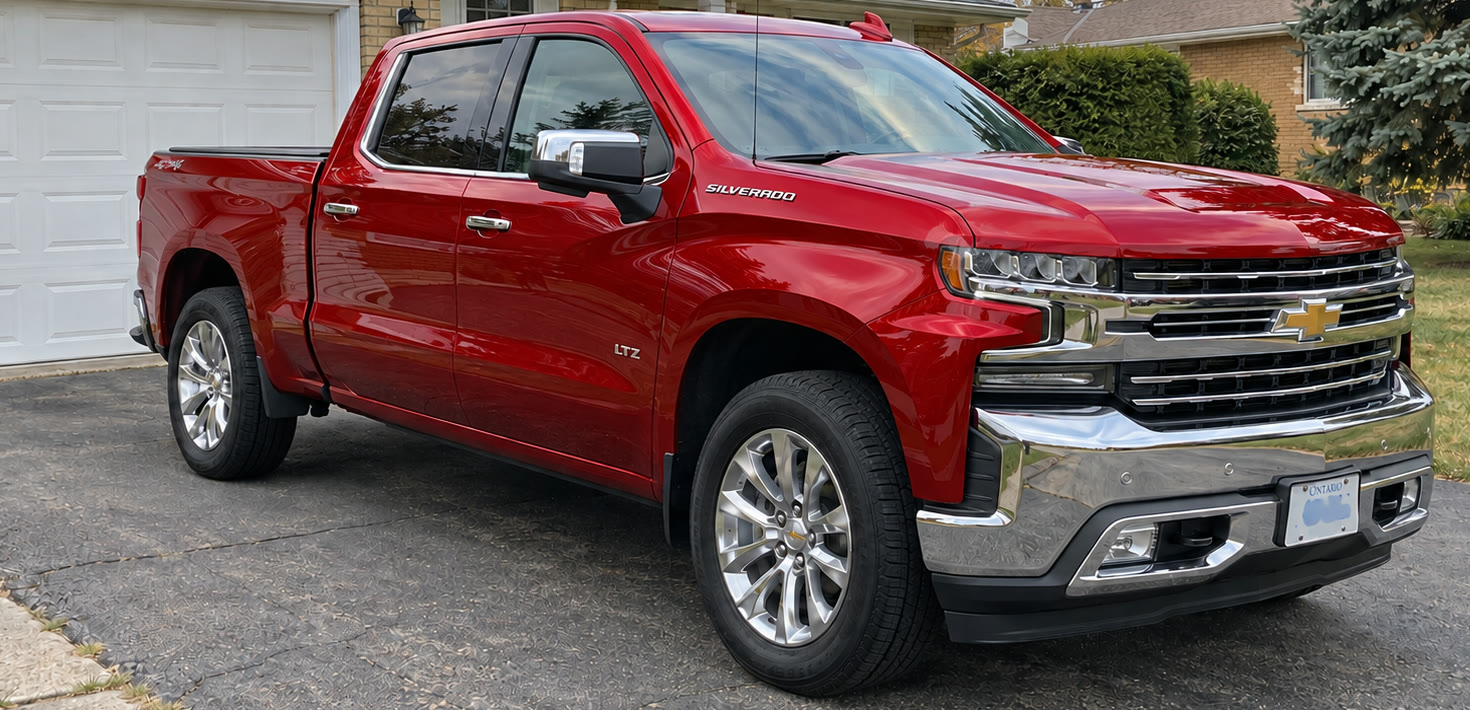
Our own work, every one. Drag anywhere on an image to compare.
What a Ceramic Coating Actually Is
Think of your paint as a stack. Steel or aluminium at the bottom, then primer, then the coloured base coat, and on top of all of it a layer of clear coat that does the actual protecting. Everything a car does to itself — swirls from bad washing, etching from bird droppings, the slow chalky fade of oxidation — happens in that clear coat. A ceramic coating adds one more layer above it, and unlike wax it does not simply rest there. As it cures it cross-links into a dense, glass-like film that is anchored to the clear coat rather than sitting on it.
That is why the comparison people reach for — “so it's like a really good wax?” — is the wrong shape. A wax is a sacrificial film you re-apply every few weeks. A coating is a surface change you make once and then maintain. The diagrams below show both ideas: what the layer actually looks like, and what it does to a drop of water.
Wax on top vs. coating bonded in
Why water beads: contact angle
The straight version
What It Does — and What It Doesn't
Ceramic coating is oversold constantly, and that is bad for everyone who sells a real one. Here is the honest split, so you can decide whether $1,499 to $1,899 is money you actually want to spend.
What it genuinely does
- Repels water. The surface becomes hydrophobic, so rain and wash water bead up and run off instead of sheeting and drying into hard mineral water spots.
- Resists chemical etching. Bird droppings, tree sap, bug splatter and winter road salt sit on the coating rather than bonding into the clear coat, which buys you real time to wash them off before they mark the paint.
- Blocks UV. Sunlight over months and years is what fades and oxidises paint, and it is worst on reds and dark colours. A UV-stable coating takes that exposure instead of the clear coat.
- Makes washing dramatically easier. Dirt has far less to grip. Most washes become a rinse, a gentle pH-neutral shampoo and a dry — which itself protects the paint, because most swirl marks are put there by washing.
- Adds gloss and depth. A hard, optically clear layer over freshly corrected paint reads as depth rather than shine — and because it is bonded, it still reads that way in year two.
What it does not do
- It is not scratch-proof. A coating is a few microns thick. It will shrug off light marring, but it does not stop a key, a shopping cart or a careless wash mitt. Nothing chemical does.
- It is not rock-chip protection. Highway stone chips are impact damage. Only paint protection film absorbs that, and a coating is not a cheaper version of film — it is a different product solving a different problem.
- It is not a substitute for washing. Contaminants still land on the car; they just sit on top now. Left there for weeks in the sun, they can still mark the coating, and a neglected coated car looks worse than a washed uncoated one.
- It does not survive a brush tunnel. Automatic washes with spinning brushes put swirls into anything, coated or not. Hand wash, or touchless only.
- It does not fix existing damage — it preserves it. Swirls, scratches and oxidation under a coating are sealed in for years. That is the single most important thing on this page, and it is why correction comes first.
If you want the longer technical version, we wrote one: the complete guide to ceramic coating covers the chemistry, the application window and the cure in more depth.
Paint Correction Comes First. Always.
A coating locks in whatever is underneath it
This is not an upsell, it is physics. The coating cures into the surface it is applied to. If that surface has swirl marks, wash marring, light scratches or oxidation, the coating hardens over them and they are there for the life of the coating — and now they are under a layer that is deliberately difficult to remove. A coating applied over bad paint does not hide the damage. It preserves it, glossily, for years.
Any shop that offers to coat your car without correcting it first is selling you a very expensive way to make a problem permanent.
Because of that, we do not sell coating and correction separately and then let you choose. Every ceramic tier on this page already includes a 1-step paint correction and polish in the price, along with a full decontamination and clay bar, water spot removal, and an Executive Exterior detail. There is no separate prep invoice, and there is no version of this job where we skip the step that makes the rest of it worth doing.
Sometimes a 1-step is not enough. Heavily swirled paint, a black car that has been through years of automatic washes, or deeper defects can need a 2-step. In that case the technician inspects the paint on-site, shows you what they are seeing, tells you what it would take, and the price may increase from there — before any work starts, never after. If you want to understand the two processes separately, read our paint correction page or the shorter comparison, paint correction vs. ceramic coating.
Not sure which tier you need?
The booking form prices your exact vehicle, including any size surcharge and travel, before you pay anything.
Three durability tiers
Ceramic Coating Prices
All three are real bonded coatings, all three get identical preparation, and all three include the same correction and detail work. What changes between them is the coating itself.
3Year
For the daily driver you keep for a few more years. A lease you will hand back, a commuter that lives outside, or a first coating where you want to see what the ownership actually feels like before committing to the thickest film available.
Book 3 Year5Year
For the car you intend to keep. The middle tier buys meaningfully more film and more chemical resistance for $200, which is the smallest step up in price on this page and the one that most often makes sense on a vehicle you are not planning to sell soon.
Book 5 Year8Year
For paint you care about. Our thickest, most durable coating — the right answer for a new vehicle being protected from day one, a dark or red colour that punishes UV exposure, or anything that sits outside year-round through Ontario winters.
Book 8 YearSale prices hold until October 31, 2026, and they are for cars and trucks. Larger vehicles carry a size surcharge, shown before you pay.
What actually differs between the tiers
Not the marketing. The difference is the coating chemistry and how much of it ends up on the paint. A longer-rated tier is a thicker film with a denser cross-linked network once cured, which means two concrete things: there is more sacrificial material to lose before protection starts dropping off, and the network itself is more resistant to the UV and chemical attack that breaks a coating down in the first place. Thicker and harder also tends to mean a longer, less forgiving application window, which is a workmanship cost rather than a customer-facing one.
What the tier number is not is a countdown clock. It is a durability rating for the chemistry, not a promise that the car looks untouched on year eight no matter how it is treated. A neglected 8-year coating will underperform a maintained 3-year one, every time. The maintenance section below is the part that decides which of those you end up with.
The appointment
How a Mobile Ceramic Coating Is Done
We are fully mobile. We come to your driveway, your workplace parking spot or your marina anywhere in the Greater Toronto Area, and we bring our own power and water — you do not need to supply an outlet or a hose. A coating is typically a full-day appointment, plus cure time.
- Wash and decontaminateFoam soak, hand wash, wheels and wheel wells, then chemical and clay-bar decontamination to lift the bonded industrial fallout, rail dust and road film that a wash alone leaves behind. Coating over contamination just seals the contamination in.
- Correct the paintMachine polishing to remove swirl marks, wash marring and light scratches, so what the coating locks in is the paint at its best rather than the paint as it arrived. This is the included 1-step; if the technician finds it needs more, you will hear about it before anything else happens.
- Panel prepA full wipe-down with an isopropyl alcohol solution to strip out every trace of polishing oil. Oils left on the surface will stop the coating bonding, and a coating that has not bonded properly fails early and unevenly.
- Apply the coatingApplied by hand, panel by panel, levelled and buffed inside the product's working window before it flashes. This is the part that cannot be hurried and cannot be done in poor light, which is why it is a full-day job rather than an afternoon one.
- CureThe coating hardens over the following hours and days. It needs to stay dry and undisturbed — typically 24 to 48 hours out of the rain, and longer before the first wash. Tell us where the vehicle will sit for those first couple of days when you book and we will talk timing through with you; a garage or covered spot is ideal.
Book your coating
Pick a tier, pick a date, secure it with a deposit. The full price — including any size surcharge and any distance and fuel fee for your address — is shown before you pay.
Aftercare
The Wash Schedule That Keeps a Coating Performing
A ceramic coating is a surface you maintain, not a result you buy. The good news is that maintaining it is genuinely easier than maintaining uncoated paint — dirt has less to hold onto, so most washes are quicker and gentler than they used to be. The bad news is that “easier” is not “never,” and the single fastest way to waste $1,899 is to treat a coated car as self-cleaning.
First 48 hours
Keep it dry and do not wash it. The coating is still hardening. Rain on a curing coating is the one thing that can genuinely spoil the finish.
Every ~2 weeks
Hand wash with a pH-neutral, ceramic-safe shampoo and two buckets, or a proper touchless wash. Rinse well, then dry with clean microfibre rather than letting it air-dry.
Straight away
Bird droppings, tree sap and bug splatter come off as soon as you see them. The coating buys you time, not immunity — baked on in summer sun, they can still mark it.
Winter, and after
Rinse road salt off more often than every two weeks, including the lower panels and wheel wells. Then a proper decontamination detail in spring to reset the surface.
The rules that matter most
- Never an automatic brush tunnel. Spinning brushes carry the grit from every car ahead of you. They put swirls into coated paint exactly as happily as into uncoated paint.
- Two buckets, or touchless. One bucket of shampoo, one of clean rinse water with a grit guard. Most swirl marks in the world are put there by a dirty mitt going back onto a panel.
- Dry it, don't let it dry. Beading is not the same as no water spots — a bead that evaporates on a hot panel still leaves its minerals behind. Clean microfibre, or a filtered blower.
- No harsh degreasers or tunnel-wash chemicals. Strongly alkaline products strip hydrophobic performance early. A pH-neutral shampoo is not fussiness, it is the difference between year five and year three.
- A periodic maintenance detail. A light decontamination wash and inspection catches anything early and keeps the coating performing at its rated level, rather than finding out three years in that it stopped beading two winters ago.
Ontario winters are the hardest thing a coating here will face, and salt is the reason — we go into the detail in protecting your car from winter road salt.
Coating the Rest of the Vehicle
A paint coating protects paint. Two related add-ons cover surfaces it does not reach, and both can be added to a ceramic booking: Full Interior Ceramic Sealant, for upholstery and interior surfaces that take spills and UV through the glass, and Convertible Roof Ceramic Coating, for fabric tops that soak up water and stain. Glass is already handled — the hydrophobic glass work that costs extra on other packages is included here.
Every add-on we offer, with what it does and what it costs, is listed on the Services Explained page, and priced live inside the booking form.
Ceramic Coating Across the GTA
We cover the Greater Toronto Area and a long way beyond it, and because we are fully mobile the job happens wherever the car already is. Addresses outside the free zone carry a distance and fuel fee, which is quoted up front in the booking form rather than added afterwards.
Straight answers
Ceramic Coating FAQ
How much does a ceramic coating cost in Toronto?
At Top Drive Detailing a ceramic coating costs $1,499 for the 3-year tier, $1,699 for the 5-year tier and $1,899 for the 8-year tier. Every tier already includes decontamination, clay bar, water spot removal, an Executive Exterior detail and a 1-step paint correction and polish, so there is no separate prep bill on top.
Larger vehicles carry a size surcharge, which is shown before you pay. RVs are priced per foot and boats are quoted separately. A 50% deposit confirms the booking.
What does a ceramic coating actually do?
A ceramic coating bonds a thin, hard, glass-like layer to your clear coat that repels water, resists chemical etching from bird droppings, sap and road salt, blocks UV that fades and oxidises paint, makes the car much easier to wash, and adds gloss and depth.
The mechanism is simple: it gives contaminants a slick, low-energy surface to sit on instead of a porous one to bond into, which buys you time to wash them off before they cause damage.
Does ceramic coating prevent scratches and rock chips?
No. A ceramic coating is not scratch-proof and it is not rock-chip-proof — only paint protection film stops physical impact damage. A coating is a few microns of chemical protection, not armour.
It will not stop new swirl marks from a careless wash either, which is why an automatic brush tunnel is still a bad idea on a coated car. Anyone telling you otherwise is selling you something that does not exist.
Do I need paint correction before a ceramic coating?
Yes — a coating locks in whatever is underneath it, so swirls, scratches and oxidation have to be polished out first or they are sealed under the coating for years.
This is why every ceramic tier we sell already includes a 1-step paint correction and polish in the price. If the technician inspects the paint on-site and finds it needs more than a 1-step, they will tell you before starting and the price may increase from there. More on the process on our paint correction page.
What is the difference between a 3, 5 and 8 year ceramic coating?
The difference is the coating chemistry and how much of it ends up on the paint — a longer-rated tier is a thicker, more densely cross-linked film with more sacrificial material to lose before protection drops off. All three are real bonded coatings and all three get the same preparation.
The year figure is a durability rating for the chemistry, not a guarantee that the car will look untouched on year eight regardless of how it is treated. A maintained 3-year coating will outperform a neglected 8-year one.
Can a ceramic coating be applied at my home?
Yes — we are fully mobile and bring our own power and water to your driveway, workplace or marina anywhere in the Greater Toronto Area.
The one thing a coating needs that a regular detail does not is a dry, undisturbed cure, typically 24 to 48 hours out of the rain. Tell us where the vehicle will sit for the first couple of days and we will talk through timing when you book — a garage or covered spot is ideal.
How do I wash a ceramic coated car?
Hand-wash with a pH-neutral, ceramic-safe shampoo and two buckets, or use a proper touchless wash — never an automatic brush tunnel. Rinse thoroughly, dry with clean microfibre rather than letting it air-dry, and wash roughly every two weeks, or sooner after road salt, bird droppings or sap.
A coating makes washing easier. It does not replace washing.
How long does the appointment take and when can I drive the car?
A ceramic coating is typically a full-day appointment, plus cure time. The decontamination, clay bar, correction, panel prep and coating all happen in one visit.
The coating then needs to cure undisturbed — normally 24 to 48 hours out of the rain, and longer before the first wash.
Do you ceramic coat RVs and boats?
Yes. RV ceramic coating is priced per foot at $190 per foot with a 20-foot minimum, so the smallest RV coating is $3,800.
Boats are quoted separately rather than priced from the list, because hull size and condition vary too much for a flat figure to be honest. Call 647-453-1299 or email info@topdrivedetailing.com and we will quote it.
Read More Before You Decide
Get My Price
Three tiers from $1,499, down from $1,799 — correction, decontamination and an Executive Exterior detail included in every one. The booking form prices your exact vehicle, including any size surcharge and travel, before you pay. 50% deposit confirms the date.
Book Now